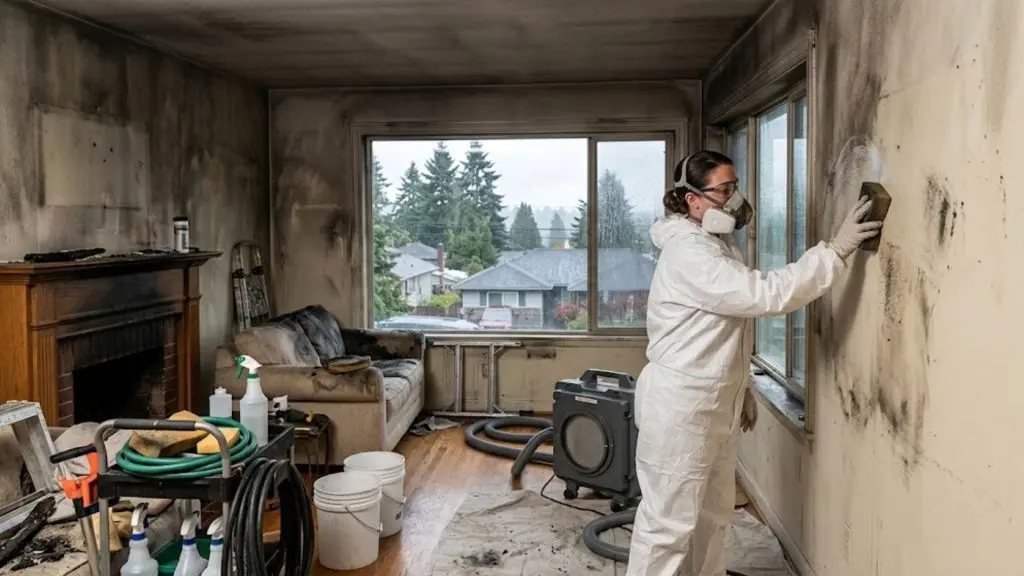
A kitchen fire that lasts two minutes can leave soot on every wall in the house long after the flames are out. Smoke travels through HVAC ducts, settles into drywall, and clings to fabric, and it keeps causing damage well past the point when the immediate danger is gone. In Seattle, where wildfire smoke can also drift in from summer fires east of the Cascades, homeowners often deal with smoke residue even when no fire touched their property directly.
This guide walks through what smoke damage cleanup in Seattle actually involves, the warning signs that mean it is time to call a professional, and what our team does once we arrive. If you are staring at soot-covered walls or a smell that will not go away, understanding the process now will help you make faster, better decisions.
Smoke damage cleanup is not the same as a deep clean. Soot particles are acidic and can etch into glass, metal, and painted surfaces within hours, which is why the type of residue determines the cleaning method. Our team identifies whether we are dealing with dry soot from a fast fire, wet soot from a smoldering one, or protein residue from a kitchen fire before we touch a single surface.
Each residue type responds differently to cleaning agents. Using the wrong product on the wrong residue can smear soot deeper into porous materials or set an odor permanently into fabric and drywall. That is the main reason DIY attempts often make smoke damage look better in the short term while leaving the underlying problem untouched.
Seattle homes see smoke damage from a mix of everyday accidents and regional conditions. Knowing the source helps determine how deep the residue has traveled and what cleanup approach fits.
Grease fires and unattended stovetop cooking are among the most common sources of residential smoke damage. Protein-based smoke from these fires is often invisible at first but carries a strong, persistent odor that spreads through cabinets and appliances.
Older Seattle housing stock, particularly homes with outdated wiring, is more prone to electrical fires that smolder inside walls before becoming visible. Smoke from these fires tends to travel further because it burns slower and cooler.
During wildfire season, smoke from fires burning east of the Cascades can drift into the Puget Sound region and infiltrate homes through HVAC systems, attic vents, and window gaps, leaving a fine soot film even without a fire on the property itself.
Improperly maintained fireplaces, unattended candles, and space heaters placed too close to combustible materials are common causes of localized smoke and soot damage, especially in older homes.
Some smoke damage is obvious. Other signs are easy to miss until the smell or discoloration has spread. Watch for:
If more than one of these signs is present, the smoke has likely spread further than what is visible on the surface, which is when a professional inspection becomes worthwhile.
When our team responds to a smoke damage call, we follow a structured process built around the type and extent of residue present.
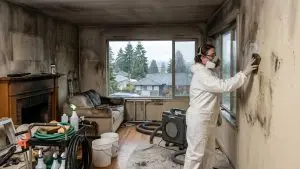
We start with a room-by-room inspection to identify residue type, assess how far smoke has traveled through the HVAC system, and document the damage for insurance purposes.
Before cleaning begins, we set up containment to prevent soot particles from spreading into unaffected areas of the home during the cleanup process.
Our team uses HEPA-filtered vacuums and dry chemical sponges suited to the specific residue type, followed by targeted cleaning agents on surfaces, fixtures, and HVAC components.
Odor removal requires more than surface cleaning since smoke molecules embed in porous materials. We use thermal fogging and hydroxyl generation to neutralize odor at the molecular level rather than masking it.
Once residue and odor have been addressed, affected surfaces are sanitized to remove any remaining contaminants before the space is cleared for normal use.
Smoke residue carries health risks that are not always obvious. Soot can introduce compounds like polycyclic aromatic hydrocarbons and formaldehyde into a home’s air, and fine particulates can irritate lungs or trigger respiratory issues in people with asthma or other conditions.
Professional smoke damage cleanup also protects the value of a home. Acidic soot residue left untreated continues to corrode metal fixtures, discolor surfaces, and degrade materials over time. Our IICRC-certified technicians follow established restoration standards designed to fully remove residue rather than temporarily reduce its appearance.
The first hours after discovering smoke damage matter. A few simple choices can prevent the situation from getting worse while help is on the way.
Most standard Washington homeowners policies cover smoke damage resulting from a sudden and accidental fire, including cleanup and restoration costs. Our team provides photographic documentation, written damage assessments, and detailed restoration scopes that adjusters can review, and we communicate directly with carriers throughout the claims process to help move things along.
Timing depends on the extent of the damage. A single room with light residue may take a day or two, while whole-home smoke infiltration involving HVAC cleaning and deodorization can take longer. Our team provides a timeline estimate after the initial inspection.
Yes, if the source of the odor was only masked rather than removed. This is common with DIY cleaning attempts that address visible soot but leave residue embedded in porous materials like drywall or carpet padding.
Most standard policies cover smoke damage from sudden, accidental fires. Coverage details vary by policy, so it is worth confirming specifics with your carrier or asking our team for help documenting the claim.
In most cases, yes. Smoke particles collect in HVAC filters and ductwork, and leaving them in place can recirculate soot and odor through the home even after surfaces are cleaned.
Very light, surface-level soot on non-porous surfaces can sometimes be managed with careful cleaning. Anything involving porous materials, HVAC systems, or a persistent odor is better handled by professionals to avoid making the damage worse.
Smoke damage rarely stays contained to the room where it started, and the longer soot and odor sit untreated, the harder they are to remove. Our team handles smoke damage cleanup across Seattle with a process built around identifying the residue correctly the first time. If your home has smoke damage from a fire, a wildfire smoke event, or a smaller kitchen incident, reach out to RW Restoration for an inspection and a clear plan for getting your home back to normal.