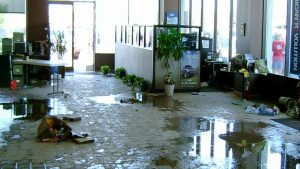

When you discover standing water in your finished basement in West Seattle or notice a dark stain spreading across your ceiling in Ballard, the window for effective mitigation is incredibly narrow. You should call for professional water damage restoration services immediately if the water has bypassed your ability to extract it with a standard wet-vac or if the source involves “grey” or “black” water. In the specific climate of the Pacific Northwest, where indoor humidity often mirrors the damp exterior, waiting even 12 hours can allow moisture to penetrate deep into structural timber and insulation. Professional intervention is required to ensure that the structural drying process reaches the “dry standard” necessary to prevent the rapid onset of wood rot and mold colonies.
Water damage is considered an emergency if it involves a constant flow of water, electrical hazards, or the saturation of structural materials like drywall and subflooring. In Seattle, emergencies often arise from failed sump pumps during heavy rain cycles or burst pipes in older homes in neighborhoods like Queen Anne. If the water has reached the baseboards or is dripping through a light fixture, it is a critical situation that requires 24-hour water damage restoration in Seattle to stabilize the property and prevent a total loss of the interior finishes.
Delays in these scenarios are particularly costly because of “secondary damage.” This occurs when high humidity levels in the air cause condensation on previously dry surfaces, leading to mold growth in closets and behind furniture. Emergency water removal services in Seattle utilize industrial-grade extractors that can pull gallons of water per minute, effectively halting the wicking process that draws moisture up into your wall studs and insulation.
Professional water damage restoration in Seattle is the only way to navigate the complexities of modern building materials and local environmental factors. Modern Seattle homes, especially the townhomes found in Capitol Hill or the Central District, often use engineered wood and dense insulation that trap moisture inside wall cavities. Without specialized equipment, this moisture stays trapped indefinitely, creating a breeding ground for structural decay. Certified water restoration experts in Seattle use non-invasive moisture meters and infrared cameras to “see” through walls and identify exactly where the water is hidden.
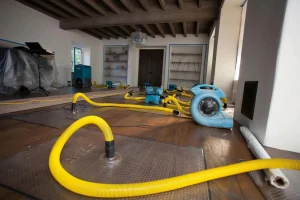
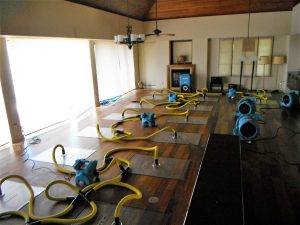
This level of precision is necessary because the Puget Sound region’s air is often too saturated to allow for natural evaporation. Restoration professionals create a “drying chamber” within your home, using LGR dehumidifiers to artificially lower the relative humidity. This forces moisture out of the building materials and into the air where it can be collected and removed, a process that simply cannot be replicated with household fans or space heaters.
While a plumber is responsible for stopping the leak and repairing the physical pipe, a restoration expert is responsible for drying out the structure and preventing rot. If you have a significant leak in a kitchen in South Lake Union, the plumber might fix the sink, but the restoration team will handle the water that soaked into the cabinets and the subfloor. Both are necessary, but only the restoration team has the tools to ensure your home’s skeletal integrity is not compromised by lingering dampness.
Plumbers generally do not carry the high-velocity air movers or professional-grade dehumidifiers required for structural stabilization. Restoration technicians are trained in the science of psychrometry, which involves calculating the specific air exchanges needed to dry a space based on the volume of the room and the materials present. This scientific approach ensures that your home is not just surface-dry, but structurally sound.
Even small leaks can lead to significant structural issues if they occur in a critical area like a bathroom or a laundry room. In the damp climate of neighborhoods like Magnolia or Fremont, a small, persistent drip can saturate a floor joist over several months, leading to “dry rot” which is a fungus that eats the cellulose in wood. By the time you notice a soft spot in the floor, the structural damage may already be extensive.
Calling professionals for an inspection can often save thousands of dollars in the long run. They can determine if the moisture has reached the structural “sill plate” or if it is confined to the surface. To ensure your home remains protected, it is best to reach out to a professional team for a comprehensive inspection before a minor issue becomes a major reconstruction project.
The average structural drying process in a Seattle home takes between three and five days. This timeline depends on the porosity of the materials and how long the water was sitting before extraction began. Dense materials like hardwood floors or lath and plaster walls, common in the historic homes of Laurelhurst, take longer to dry than modern drywall. During this time, the restoration team must monitor the moisture levels daily to adjust the equipment and ensure the drying is progressing at the correct rate.
If the drying process is rushed, the surface may feel dry while the core of the material remains wet. This leads to “trapped moisture,” which is the primary cause of warped flooring and mold behind baseboards. Professional teams will not remove their equipment until they have documented that the materials have reached their pre-loss moisture content.
| Restoration Phase | Estimated Duration | Tools Used |
| Initial Assessment | 1–3 Hours | Thermal Cameras, Moisture Probes |
| Water Extraction | 2–6 Hours | Truck-Mount Extractors, Sub-Surface Tools |
| Structural Drying | 3–5 Days | LGR Dehumidifiers, Axial Air Movers |
| Odor Control | 1–2 Days | HEPA Air Scrubbers, Hydroxyl Generators |
| Monitoring | Daily | Psychrometric Logs, Moisture Mapping |
Whether you can remain in your home depends on the extent of the damage and the location of the equipment. If the restoration involves a main living area or a kitchen in a downtown Seattle condo, the noise from the industrial air movers can be disruptive. Furthermore, if the water is “Category 3” (sewage), you will likely need to vacate the property for health and safety reasons until the area has been fully sanitized.
The restoration team will prioritize the “containment” of the affected area using heavy-duty plastic sheeting. This helps maintain the drying environment and prevents dust or mold spores from traveling to unaffected parts of the house. To understand the safety requirements for your specific situation, you should contact an expert today to discuss preventative maintenance and restoration options tailored to your property.
High outdoor humidity in the Pacific Northwest can actually slow down the drying process if the home is not properly sealed. On a rainy day in Seattle, the air outside is near 100 percent saturation. If windows are left open, the dehumidifiers will end up trying to “dry the neighborhood” instead of your basement. Professional restoration teams use “closed-system drying” to ensure they are only processing the air inside the affected space.
This is why professional-grade dehumidification is so critical here. Standard consumer models cannot pull enough moisture out of the air to overcome the natural dampness of the region. By creating a controlled micro-climate, experts can achieve drying results in a few days that would otherwise take weeks in our natural environment.
If you suspect water is hidden behind your walls, you should immediately check for signs like peeling wallpaper, bubbling paint, or a persistent musty smell. These are common in Seattle basements near the University District, where older foundations often have minor seepage. Use a flashlight to look for “tide lines” on your foundation walls or around the base of your water heater.
Ignoring these signs can lead to wood-decay fungi that structurally weaken your home’s framing. The best course of action is to have a professional perform a non-invasive moisture survey. For immediate assistance and to prevent escalating costs, you should contact us to speak with a local restoration specialist who understands the specific building codes and environmental challenges of the Puget Sound area.
If you wait more than 48 hours, the risk of mold growth increases exponentially. Structural materials like drywall will begin to lose their integrity and may need to be replaced rather than dried. In Seattle, the high humidity can also cause metal fasteners to rust and wood to begin the early stages of rot within days.
Yes, most professional companies provide emergency water removal services in Seattle around the clock. Because water damage does not follow a schedule, having a team that can arrive within two hours is essential for minimizing the total claim cost and structural damage.
In most cases, yes. Insurance companies prefer that you call a professional restoration firm because it reduces the overall cost of the claim by preventing secondary damage. They usually cover the cost of extraction, drying, and any necessary repairs to restore the home to its original condition.
Experts use a combination of thermal imaging and moisture meters. Thermal cameras detect temperature differences; since wet areas are usually cooler than dry areas due to evaporation, they appear as dark spots on the camera. Moisture meters then confirm the exact saturation level of the material.
If the intervention happens quickly, specialized tools like “floor mats” can pull moisture directly through the wood grain without needing to remove the planks. However, if the wood has already started to “cup” or “crown,” it may require sanding or replacement depending on the severity of the saturation.
Choosing the right time to intervene determines whether your property faces a minor repair or a major structural overhaul. In the Pacific Northwest, the environmental factors are never in the homeowner’s favor when it comes to moisture. Effective water damage restoration in Seattle requires a blend of local knowledge, scientific precision, and immediate action. By trusting certified water restoration experts in Seattle, you ensure that every hidden pocket of moisture is addressed, protecting your home’s foundation and framing for the long term.
As a trusted local service provider, RW Restoration is dedicated to helping Seattle residents recover from the unexpected. Our team understands the architectural nuances of neighborhoods from Belltown to West Seattle, providing a solution that goes beyond surface cleaning. We prioritize the structural integrity of your home, using advanced technology to return your living space to a safe, dry, and healthy environment.