Discovering wet drywall after a leak, flood, or plumbing problem can be stressful. You may immediately assume that every affected wall needs to be torn out and replaced—but that isn’t always the case.
Wet drywall can sometimes be saved when the water comes from a clean source, the damage is discovered quickly, and professional drying begins before the material deteriorates. However, drywall exposed to contaminated water, prolonged moisture, or mold generally needs to be removed.
Knowing what determines whether drywall can be restored can help you respond quickly and avoid more extensive water damage repair.
Drywall is made from a gypsum core covered with layers of paper. Both materials absorb water easily, allowing moisture to spread beyond the visibly wet area.
Once drywall becomes saturated, it may:
A wall can feel dry on the surface while moisture remains trapped behind it. That is why visual inspection alone cannot determine whether wet drywall is safe to keep.
Wet drywall may be salvageable when several favourable conditions are present.
Drywall affected by Category 1 water has the best chance of being saved. Clean water may come from:
Even clean water can become contaminated when it remains inside a wall or comes into contact with dirty materials. Fast action is essential.
The sooner drying begins, the better the chance of saving the drywall. Moisture that remains for an extended period can weaken the gypsum core and encourage mold growth.
Professional restoration should begin as soon as possible, ideally within the first 24 hours. Waiting to see whether the wall dries naturally can allow moisture to spread into insulation, framing, flooring, and adjacent rooms.
Drywall may be dried in place if it remains firm, flat, and securely attached. Minor staining does not automatically mean the material must be removed.
However, drywall is unlikely to be salvageable if it is:
A restoration professional can test the material’s moisture level and condition before deciding whether removal is necessary.
Some forms of water damage make drywall removal the safest and most practical option.
Drywall exposed to grey or black water typically needs to be removed. Contaminated water may come from:
Because drywall is porous, bacteria and other contaminants can penetrate deeply into the material. Surface cleaning cannot reliably sanitize its interior.
Do not handle sewage-contaminated drywall without proper training and protective equipment.
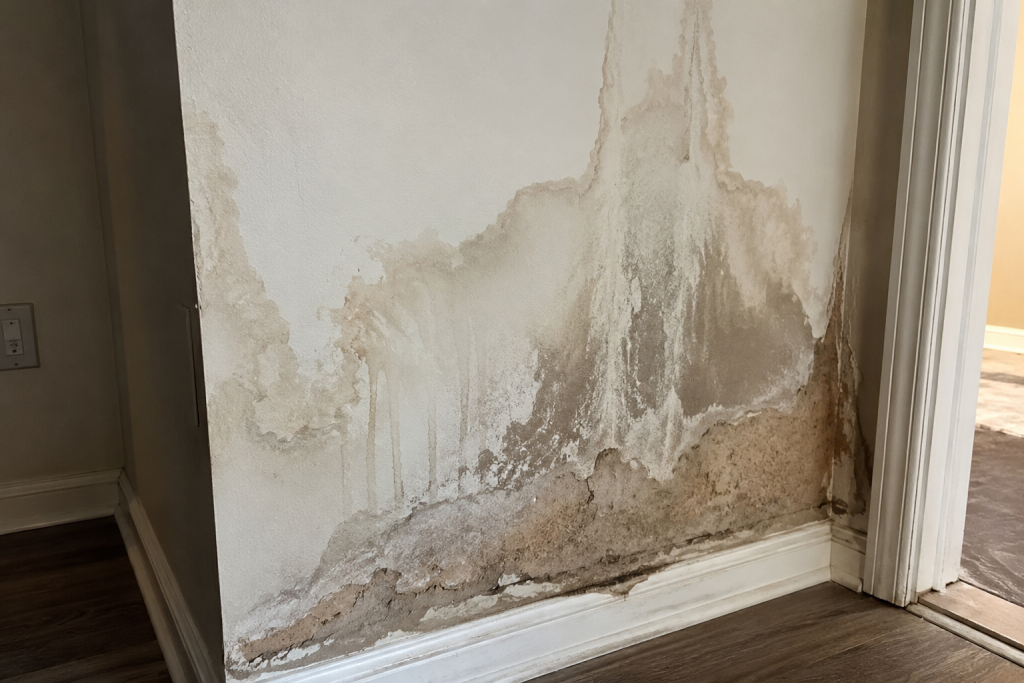
Mold can develop when drywall remains damp, particularly in humid or poorly ventilated spaces. It may appear as dark spotting, discolouration, or fuzzy growth, but mold can also remain hidden behind the wall.
Other warning signs include:
Painting over mold or applying household cleaner does not address contamination inside the wall. The affected material may need to be removed as part of a professional mold remediation process.
Once drywall becomes soft, swollen, warped, or crumbly, drying will not restore its original strength. Damaged sections should be removed so the wall cavity can be inspected, dried, cleaned, and repaired correctly.
A small amount of surface moisture from a minor, immediately resolved clean-water leak may sometimes be manageable. However, larger or hidden water damage should be professionally assessed.
Simply placing a household fan in front of the wall may dry the visible surface without removing moisture from the gypsum, insulation, framing, or wall cavity.
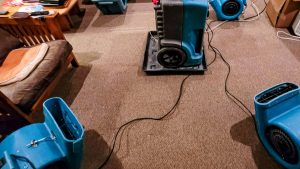
Professional water damage restoration may involve:
These steps help determine when the structure has actually reached a safe, dry condition—not merely when it looks dry.
If you notice wet drywall, take the following steps:
Do not cut into the drywall if you suspect electrical hazards, sewage contamination, mold, or significant water accumulation inside the wall.
Coverage depends on the source of the water and the terms of your policy. Homeowners insurance commonly covers sudden and accidental events, such as burst pipes or unexpected appliance failures.
Damage caused by gradual leaks, poor maintenance, sewer backups, or exterior flooding may be excluded or require additional coverage.
Document the affected areas, keep records of emergency work, and contact your insurer promptly. A professional restoration company can also provide photographs, moisture readings, and a detailed scope of the necessary water damage repair.
Whether wet drywall can be saved depends on the water source, the level of saturation, the condition of the material, and how quickly drying begins. Removing drywall unnecessarily can increase repair costs, but leaving damaged or contaminated material in place can lead to mold, odours, and structural deterioration.
RW Restoration provides professional Water Damage Restoration in Seattle and throughout Western Washington. Its IICRC-certified team uses moisture detection, water extraction, structural drying, sanitization, and reconstruction services to address both visible and hidden damage. The company also offers 24/7 emergency response for urgent water-related incidents.
If you discover wet drywall in your home or business, contact RW Restoration for an inspection. Acting quickly may improve the chance of saving affected materials and limit the extent of the damage.