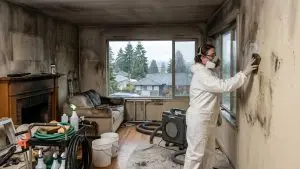
Months after a small kitchen fire, some Seattle homeowners still catch a burnt smell every time the heat kicks on. The fire is long gone, the walls have been repainted, and yet the odor keeps coming back. That happens because smoke odor is not sitting on top of surfaces, it is absorbed into them.
Smoke odor removal in Seattle requires more than candles, sprays, or open windows because those approaches only cover the smell temporarily. This article explains why smoke odor lingers, which materials hold onto it the longest, and the methods our team uses to remove it permanently rather than mask it.
Smoke is made up of microscopic particles and gas-phase compounds that settle into anything porous. As these compounds cool, they bond chemically with fibers, wood, and drywall instead of sitting loosely on the surface, which is why the smell returns even after visible soot has been wiped away.
Temperature and humidity changes can reactivate trapped odor molecules, which explains why a home can smell fine one week and smoky again the next, particularly when heating systems circulate air through affected ductwork.
Some materials in a home absorb and retain smoke odor far more stubbornly than others. Identifying which ones are affected is the first step in an effective odor removal plan.
Carpet fibers and the padding underneath trap smoke particles deep within their structure, and padding in particular can hold odor that surface cleaning never reaches.
Fabric couches, mattresses, and curtains absorb smoke the same way carpet does, often requiring specialized treatment rather than standard upholstery cleaning.
Smoke can penetrate painted drywall and settle into wall insulation, especially in rooms closest to the fire source, which is why painting over a smoke smell rarely solves the problem long term.
Ducts pull smoke particles through the entire home during and after a fire, and unaddressed ductwork can continually reintroduce odor every time the system runs.
Effective smoke odor removal depends on matching the right method to the affected material and the severity of the odor.
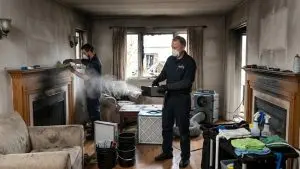
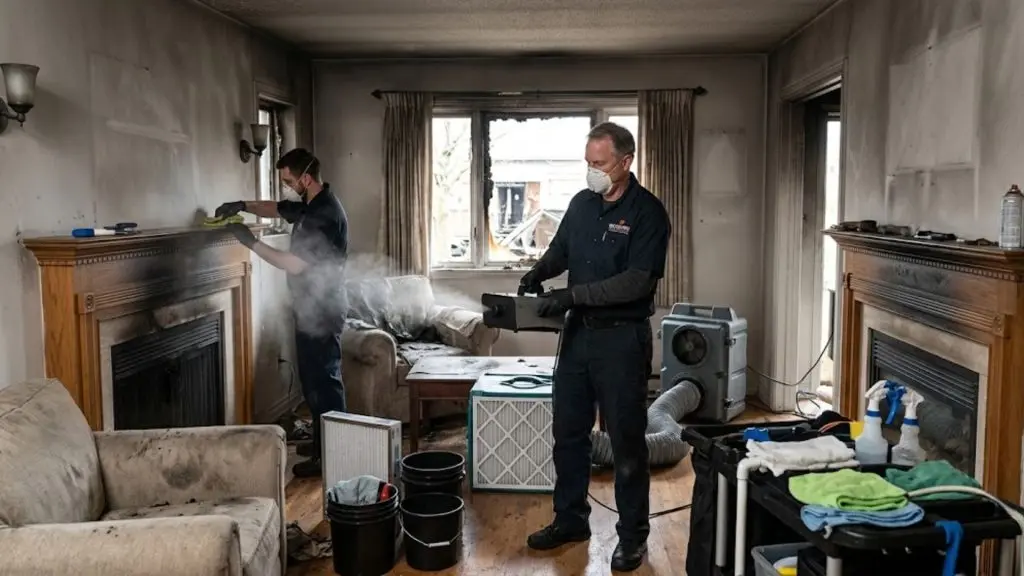
Thermal fogging uses heated deodorizing agents that mimic the way smoke originally penetrated surfaces, allowing the treatment to reach into the same cracks and pores the smoke did.
Hydroxyl generators produce hydroxyl radicals that break down odor-causing molecules at a chemical level. Unlike air fresheners, this process is safe to run while a space is occupied and does not simply cover the smell.
Ozone treatment can be effective for severe, whole-structure odor but requires the space to be unoccupied during treatment and proper ventilation afterward, which is why our team schedules it carefully around a household’s needs.
Air scrubbers with HEPA filtration continuously pull airborne smoke particles out of circulation, reducing the odor load in a room while other treatments address surfaces and materials directly.
Air fresheners and scented sprays add a new smell on top of the smoke odor rather than removing the source. Because the odor compounds remain embedded in carpet, drywall, and fabric, the smoke smell resurfaces once the fragrance fades, often within a day or two.
Store-bought ozone machines and odor bombs can also be risky without proper ventilation guidance, and using them incorrectly in an occupied space can cause respiratory irritation.
Our approach to smoke odor removal follows a sequence designed to reach odor at its source rather than mask it temporarily.
Seattle homeowners deal with smoke odor from two different sources, and each behaves differently. Structure fire odor tends to be concentrated near the fire’s point of origin and carries stronger protein or synthetic-material compounds depending on what burned. Wildfire smoke odor, which can drift into the Puget Sound region during regional wildfire season, tends to be more diffuse across the entire home since it typically enters through HVAC systems, attic vents, and window gaps rather than starting inside a single room.
Whole-home wildfire smoke odor often requires HVAC-focused treatment first, since that is usually the primary entry point, while structure fire odor removal is typically concentrated on the rooms nearest the fire.
A lingering smoke smell that returns after cleaning, temperature changes, or humidity shifts is a sign that the odor has settled into porous materials rather than surfaces. At that point, DIY cleaning and air fresheners will not resolve it. Professional treatment becomes worthwhile once the odor persists more than a few days after a fire or smoke event, or when it is noticeable throughout multiple rooms rather than one localized area.
A single room typically takes one to two days, while whole-home odor removal involving HVAC treatment can take longer depending on how far the smoke traveled. Our team provides a timeline after the initial inspection.
No, painting alone does not remove trapped odor. Smoke compounds embedded in drywall and insulation will continue to release odor unless the surface is properly treated and sealed first.
Ozone treatment is effective for severe odor but requires the space to be vacated during treatment and ventilated afterward. Our team schedules ozone use carefully and explains the process before starting.
Yes, wildfire smoke can infiltrate homes through HVAC systems, attic vents, and gaps around windows during regional wildfire season, even without any fire on the property itself.
Not always. Lightly affected carpet can sometimes be treated, but heavily saturated padding often needs to be removed since it holds odor that surface treatments cannot fully reach.
Smoke odor that keeps coming back is a sign the smell has settled into the materials of your home rather than just the air. Our team treats smoke odor at the source using thermal fogging, hydroxyl generation, and targeted material removal instead of temporary fixes. If your Seattle home still smells like smoke after a fire or a wildfire smoke event, reach out to RW Restoration for an inspection and a plan built around what is actually holding the odor in place.