Determining when to handle a moisture issue yourself versus when to call for professional water damage restoration Issaquah is the most critical decision an Issaquah homeowner can make. While a small spill on a hardwood floor in your Issaquah Highlands kitchen can be managed with a mop and a fan, any incident involving standing water for more than 24 hours or water originating from a contaminated source requires expert intervention. Professional help becomes essential when the moisture has penetrated porous structural materials like drywall, insulation, or subflooring, as household tools simply lack the power to extract deep-seated humidity. Because our local climate near Lake Sammamish keeps ambient humidity high, failing to dry a property to industry standards within the first 48 hours almost guarantees the onset of secondary mold growth, turning a simple drying job into a complex environmental remediation project.
You should call a professional if the water has been standing for more than 24 hours, if the affected area exceeds 10 square feet, or if the water is discolored or has an odor. In many cases, what looks like a minor puddle on the surface of your basement floor in Olde Town is actually the “tip of the iceberg.” Water is naturally invasive and will follow the path of least resistance, often migrating behind baseboards, under cabinets, and into the framing of your home where it cannot be seen or reached by conventional drying methods.
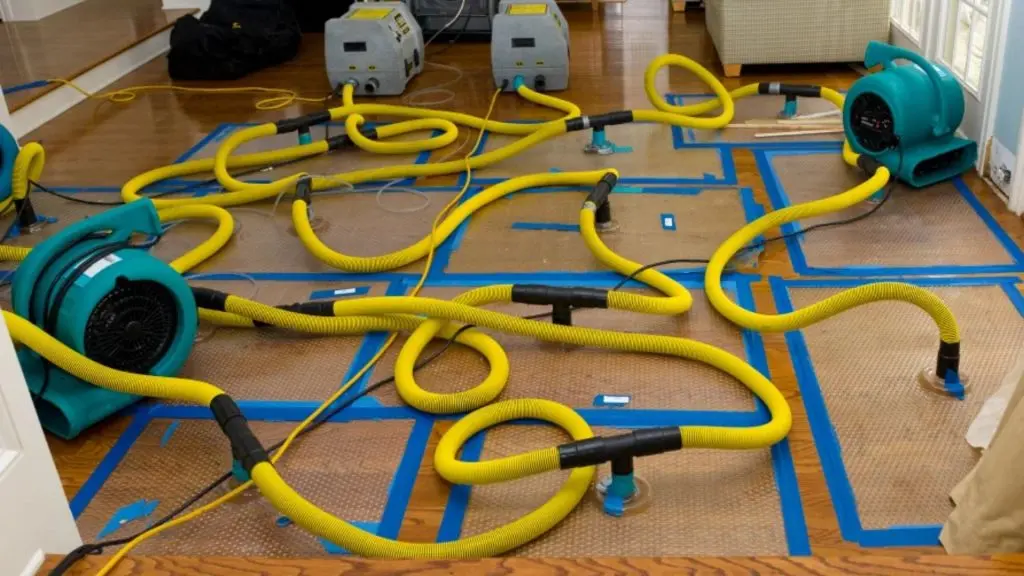
Restoration experts use specialized equipment, such as moisture meters and thermal imaging cameras, to map the full extent of the intrusion. If you cannot identify the exact source of a leak or if the water has come into contact with electrical outlets or wiring, the situation is considered high-risk. Utilizing a professional Issaquah restoration response time ensures that industrial-grade dehumidifiers and high-velocity air movers are deployed before the structural integrity of your home is compromised by rot or warping.
In the restoration industry, water is classified into three categories based on its contamination level, and a Category 3 “Black Water” event is always a mandatory call for professional assistance. This category includes water that is grossly contaminated and may contain pathogenic, toxigenic, or other harmful agents. Common examples in the Issaquah Valley include sewage backups, rising water from Issaquah Creek during a flood, or seawater.
Even “clean” water from a burst pipe can degrade into Category 3 if left untreated for more than 72 hours, as it begins to support significant microbial growth. When dealing with these emergency restoration triggers Issaquah residents often face, DIY cleanup is dangerous to your health. Professionals are trained to handle biohazards using EPA-registered disinfectants and specialized personal protective equipment to ensure your living space is not just dry, but biologically safe for your family.
Because Issaquah sits in a high-moisture corridor between Tiger Mountain and Lake Sammamish, the window for successful restoration is much narrower than in drier climates. Within just minutes of a leak, water is absorbed into furniture, upholstery, and carpets. Within hours, drywall begins to swell and disintegrate, and the finishes on wooden furniture can begin to dissolve. By the 48-hour mark, mold spores that are naturally present in our Northwest air begin to colonize damp surfaces.
Prompt action is the only way to minimize the total cost of repairs. If you are unsure whether your situation qualifies as an emergency, you should contact our restoration experts to discuss the specific signs you are seeing and determine if an on-site moisture assessment is necessary.
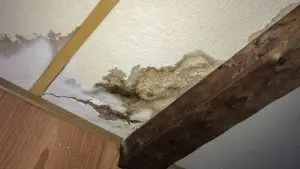
Visible signs of severe damage include sagging ceilings, buckling floorboards, and the appearance of “water rings” or dark tea-colored stains on walls. In neighborhoods with older homes like those near Gilman Village, these signs often indicate a slow, long-term leak that has been saturating the building’s skeleton for weeks. If a door or window in your home suddenly starts sticking or becomes difficult to close, it is a primary sign that the wood framing has swollen with absorbed moisture.
Another major red flag is a sudden, unexplained spike in your utility bill. This often points to a slab leak or a burst pipe in a crawlspace that isn’t immediately visible from the living area. To prevent long-term structural failure, you should get in touch with our team the moment you notice these water damage severity signs, as hidden moisture is the leading cause of “sick building syndrome” and foundation instability.
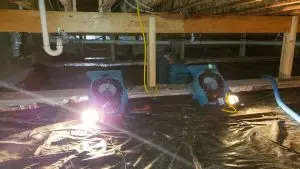
While you can handle small spills, “drying out” a structural water intrusion requires more than just opening windows or using a shop-vac. Professional water damage restoration is a scientific process called “Applied Structural Drying” (ASD). This process calculates the exact amount of “pints per day” of moisture that must be removed from the air to create a pressure gradient that pulls water out of dense materials like hardwood and wall studs.
| Equipment Type | Function in Restoration | Why Pros Use It |
| LGR Dehumidifiers | Removes moisture from the air | Can pull water from the air even at low humidity |
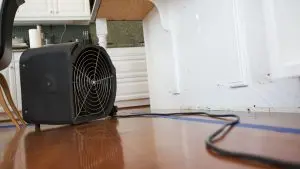
| Air Movers | Creates high-velocity airflow | Breaks the “boundary layer” of air to speed evaporation |
| HEPA Scrubbers | Filters airborne particles | Removes mold spores and dust during the drying process |
| Injectidry Systems | Dries behind walls and under floors | Prevents the need to tear out expensive cabinetry |
Without these tools, you may dry the surface of your carpet while the subfloor beneath it remains soaking wet. This trapped moisture leads to “dry rot,” a condition where the wood fibers are consumed by fungi, eventually requiring the replacement of the home’s structural beams.
Costs vary based on the category of water and the size of the area, but typical emergency extractions and drying setups range from $2,500 to $6,000. Comprehensive restoration involving structural repairs or mold removal can exceed $10,000, which is why most homeowners choose to file an insurance claim.
Most standard homeowners policies in Washington cover “sudden and accidental” water damage, such as a burst pipe or a water heater failure. However, damage caused by “gradual seepage” or lack of maintenance is often excluded. We recommend reviewing your policy’s specific endorsements for sewer backups or surface flooding.
No. Washington state law allows homeowners to choose any licensed contractor they trust for their repairs. You are not obligated to use a “preferred vendor” if you feel a different local expert better understands the specific needs of your Issaquah property.
On average, it takes 3 to 5 days to reach “dry standards” in the Pacific Northwest. Factors like the type of material (concrete takes longer than wood) and the initial saturation levels will influence the final timeline. We monitor the progress daily to ensure the equipment is moved as areas reach their targets.
It depends on the category of water and the location of the damage. If the damage is Category 1 and localized to a laundry room, staying is usually fine. However, Category 3 sewage backups or large-scale mold remediation typically require the occupants to relocate temporarily for health and safety reasons.
Deciding when to call for professional assistance is the difference between a minor inconvenience and a total loss of property value. In Issaquah, where the environment is naturally predisposed to moisture issues, the risks of “waiting it out” are simply too high. Whether you are dealing with the aftermath of a storm near Squak Mountain or a failed appliance in the Issaquah Valley, the goal is always to return your home to a pre-loss condition as quickly and safely as possible.
For those facing an immediate crisis, RW Restoration provides the high-level expertise and rapid response required to save your home. As a trusted local service provider, we specialize in water damage restoration Issaquah and are deeply familiar with the building styles and climate challenges unique to our community. From initial extraction to final reconstruction, we serve as your partner in rebuilding, ensuring every corner of your property is thoroughly dried and professionally restored.